
Explore the impact in
Nan province
Where Plant, Track, Transform began
Why Nan?
Nan is one of Thailand’s most important headwater provinces.
It feeds more than 40% of the Chao Phraya river — yet over the past decade
over a million rai of its forest has been turned into monoculture farmland.
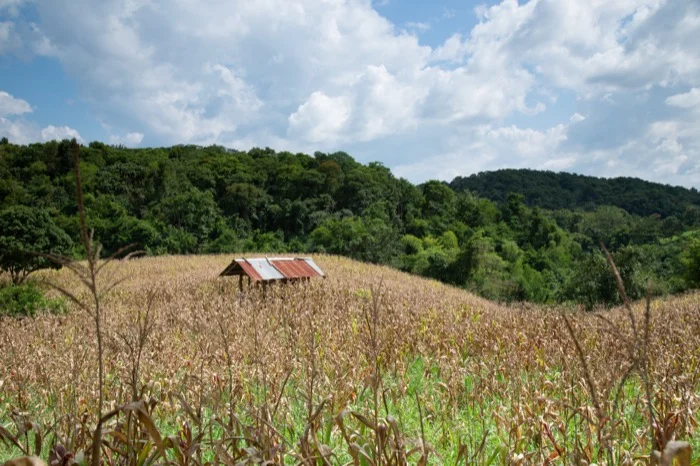
“The maize capital”
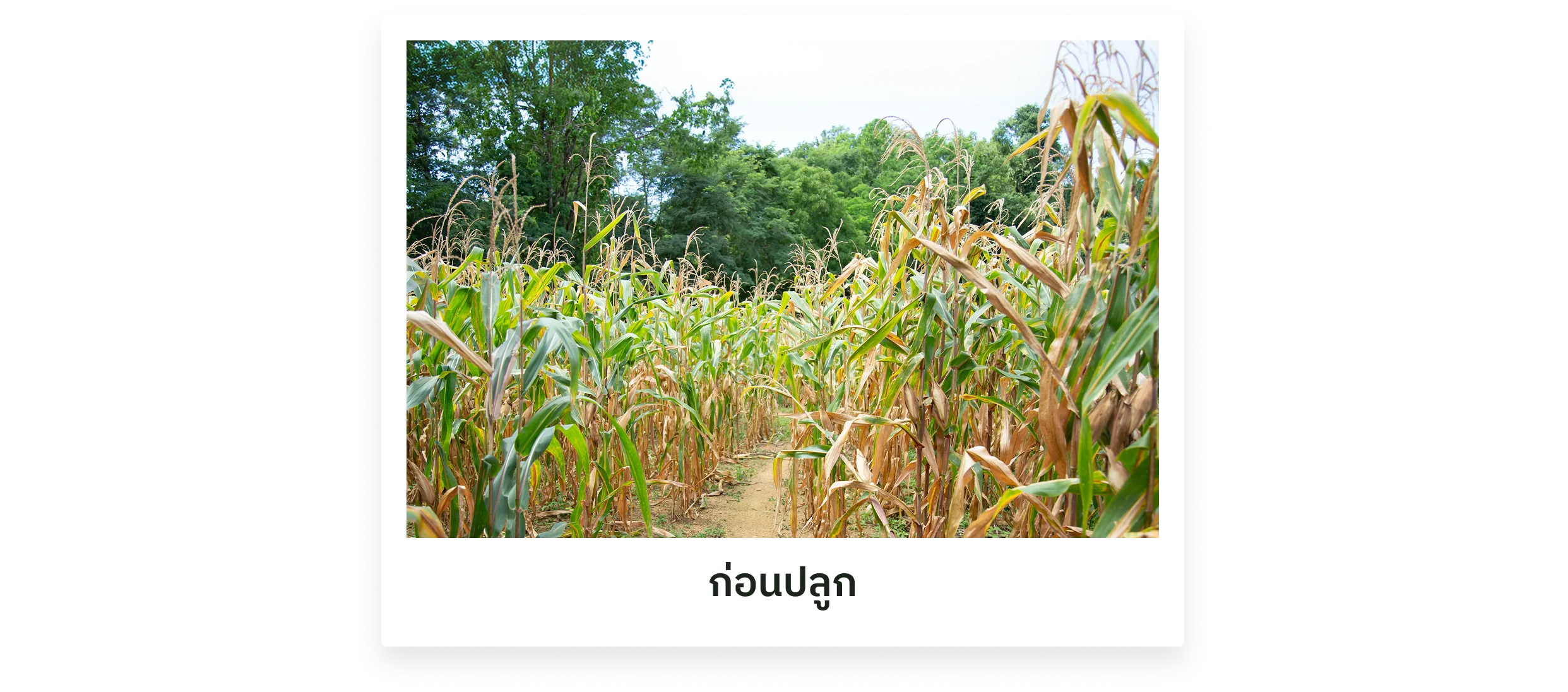
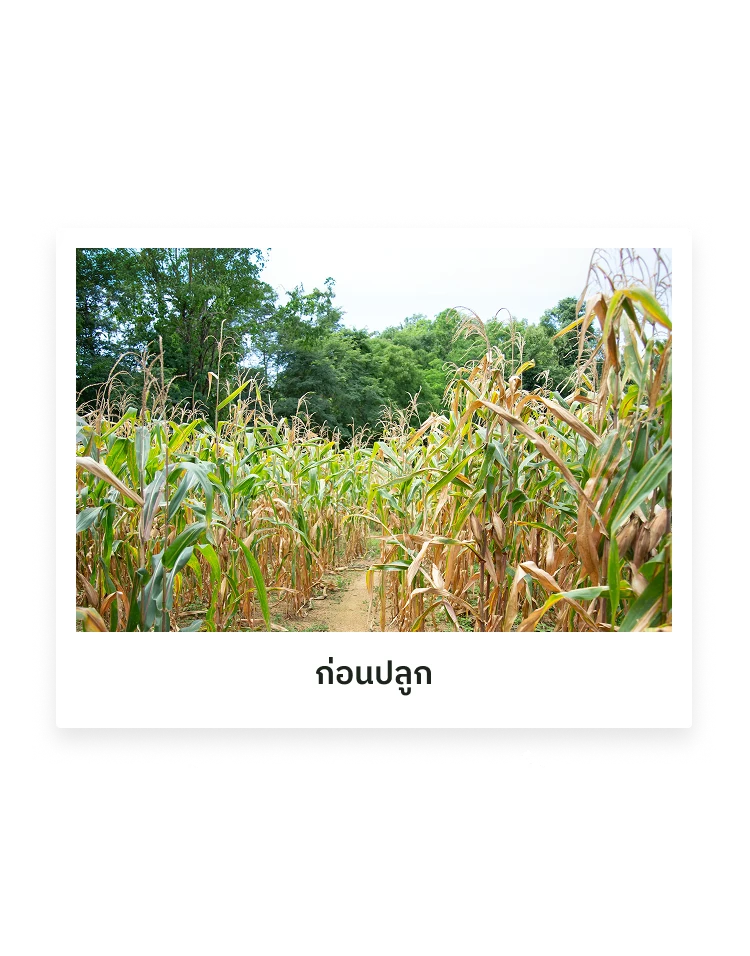
Demand from the animal feed market pushed many Nan farmers into maize and other single crops, at a scale where buyers come to the farm gate.
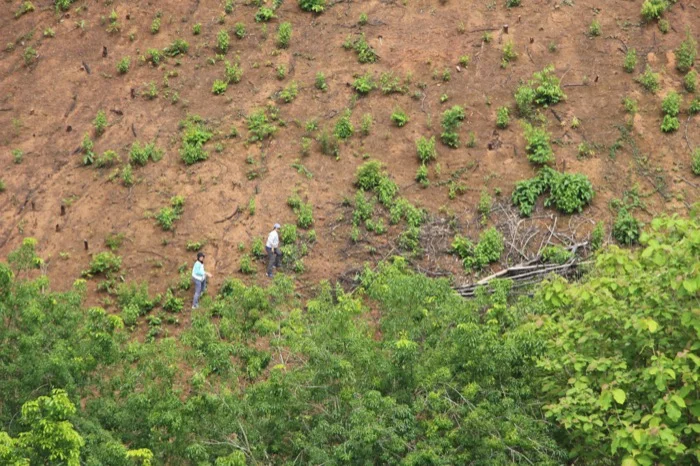
Farming on thin ice
The income is short term, the damage is not: exhausted soil, a reliance on chemicals, and crop residue burned off because the land is too steep to clear any other way — costing both the environment and people’s health.
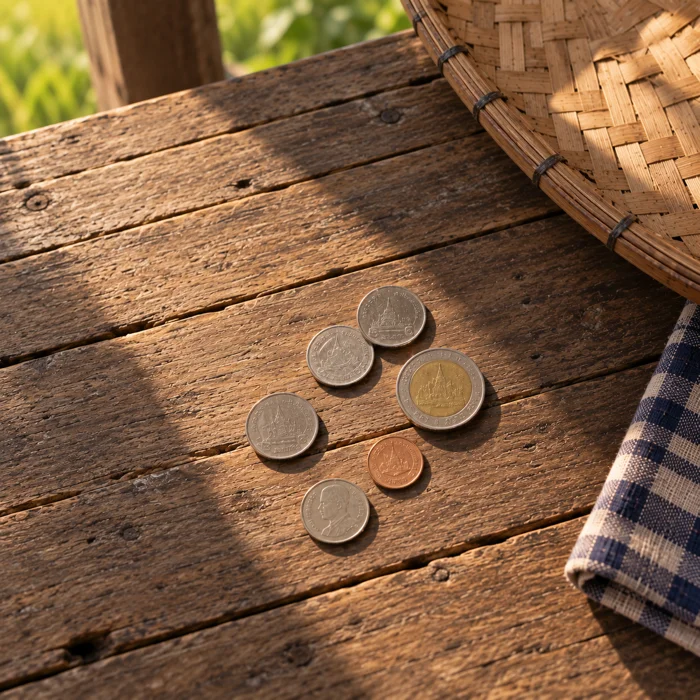
Caught in a cycle of debt
Maize and other single crops do not earn much, and debt leaves farmers without the capital to switch to something more sustainable.
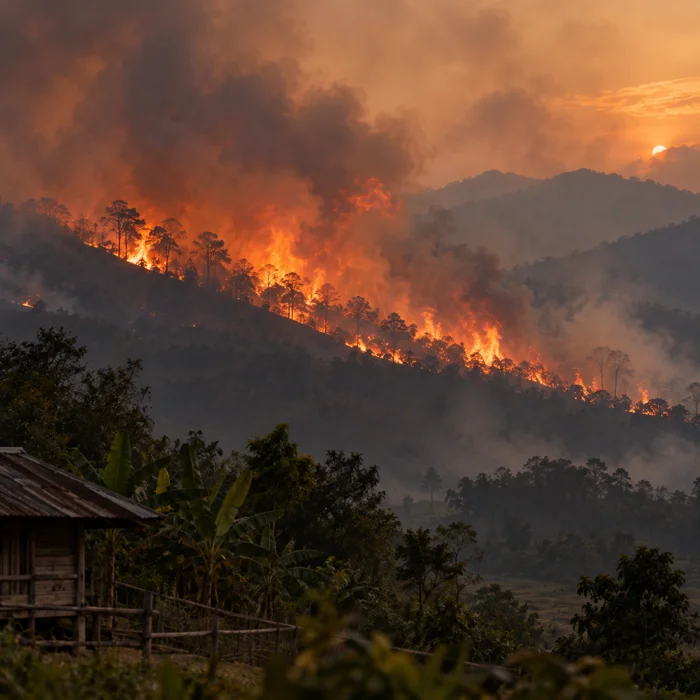
Exposed to a changing climate
With the forest gone and the soil washing away, floods, wildfires and smoke haze all hit harder as the climate shifts.
What it means for the environment
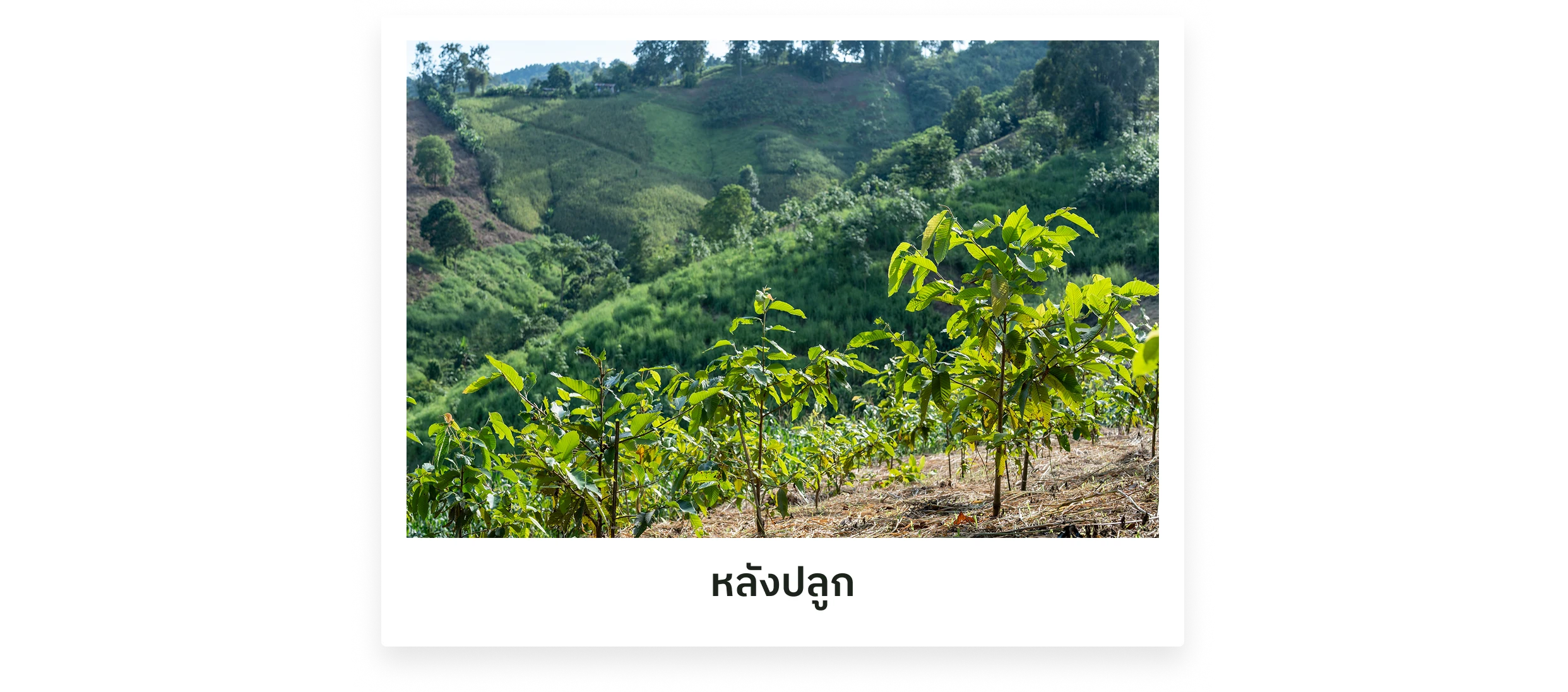
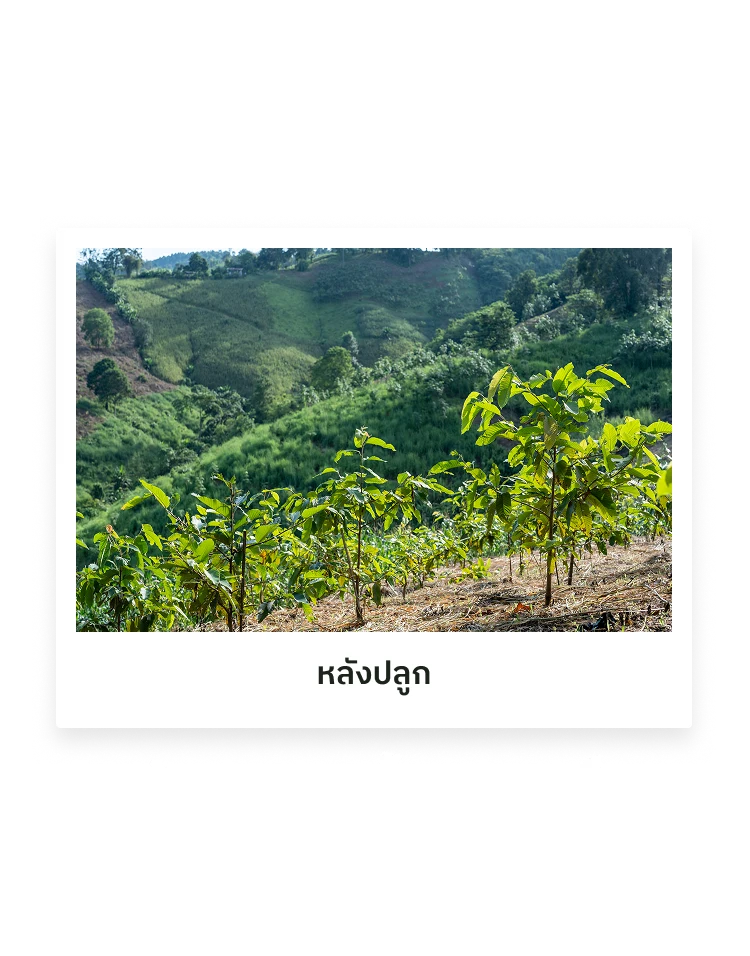
As nature returns, the whole ecosystem grows with it
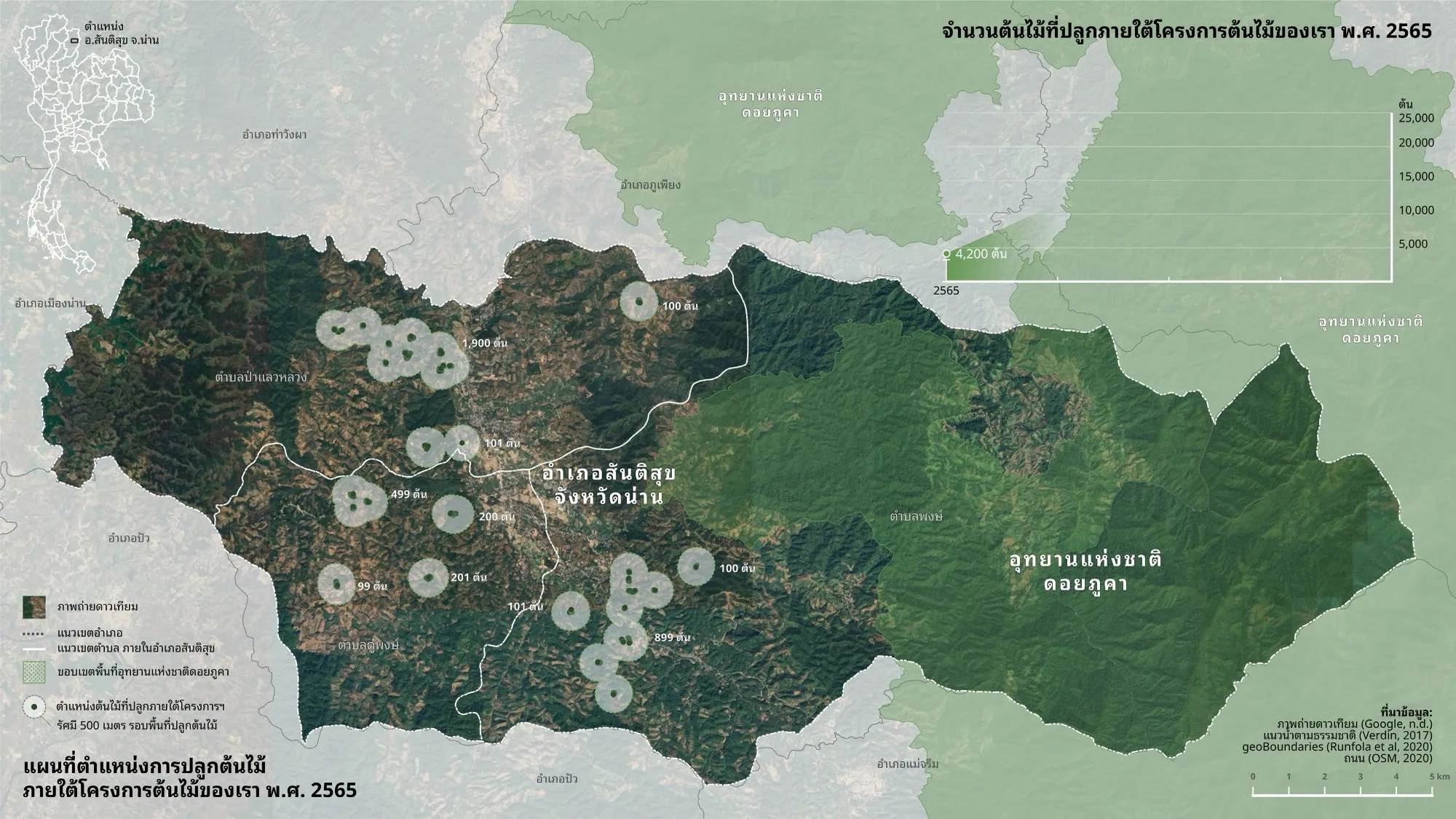
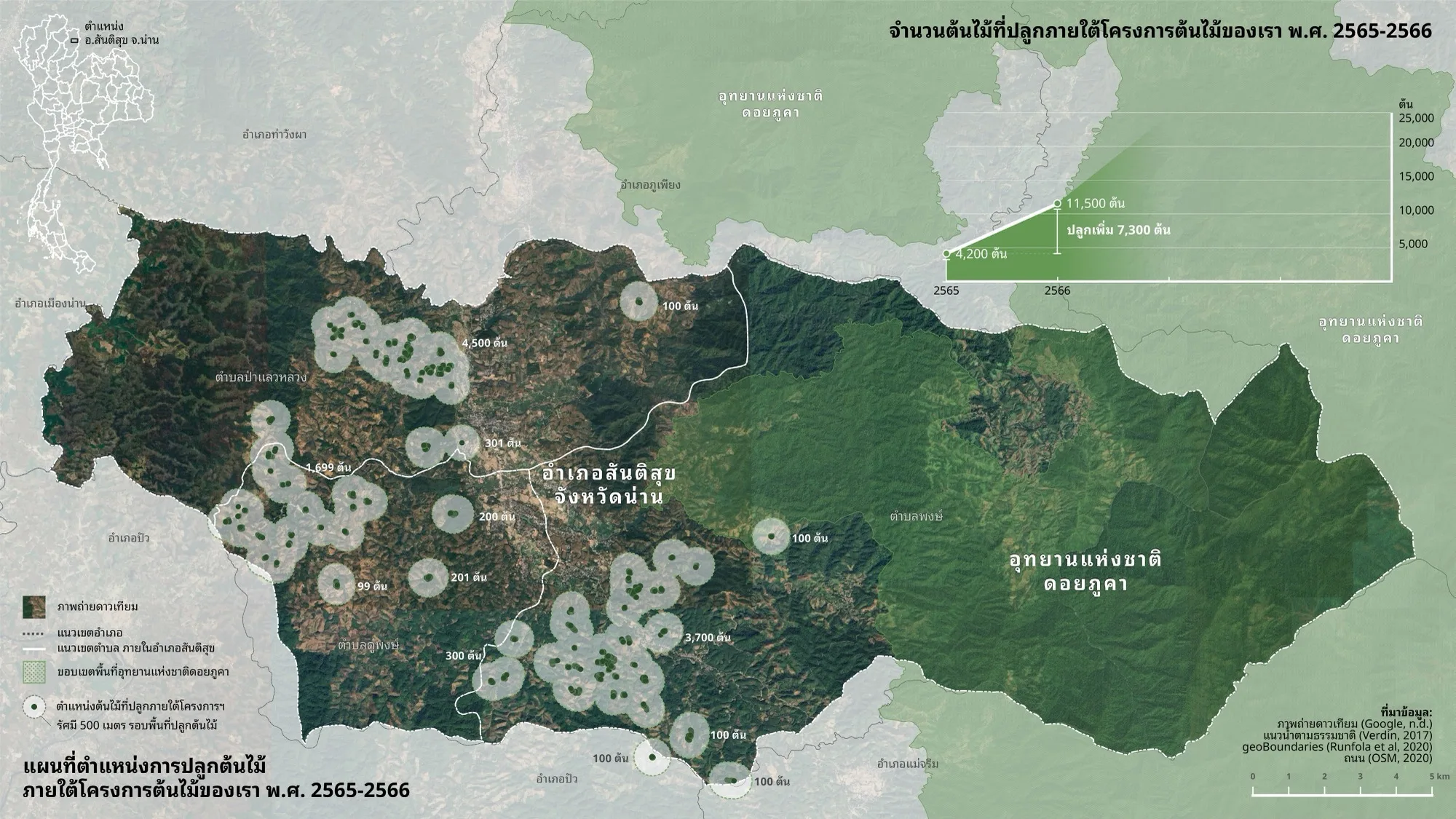
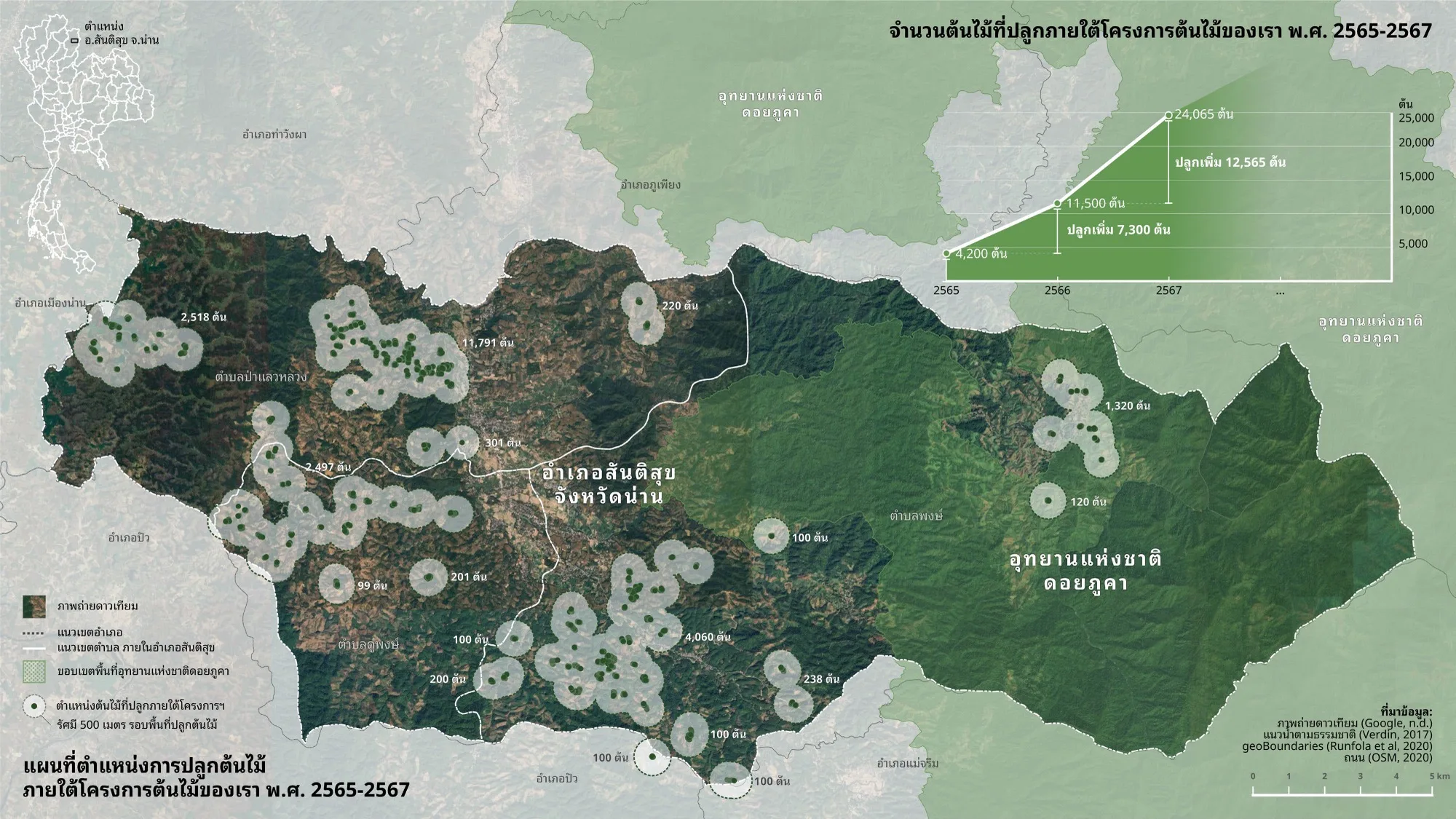
Map of planting locations
Satellite imagery | sub-district boundaries within Santi Suk district | Doi Phu Kha National Park boundary
Trees planted under the project, within a 500 m radius of each planting site
Restored plots that earn in more than one way
With capital to plant the perennials that rebuild the soil, farmers can go on to grow a wider mix — fruit trees, beans and more — and earn throughout the year.
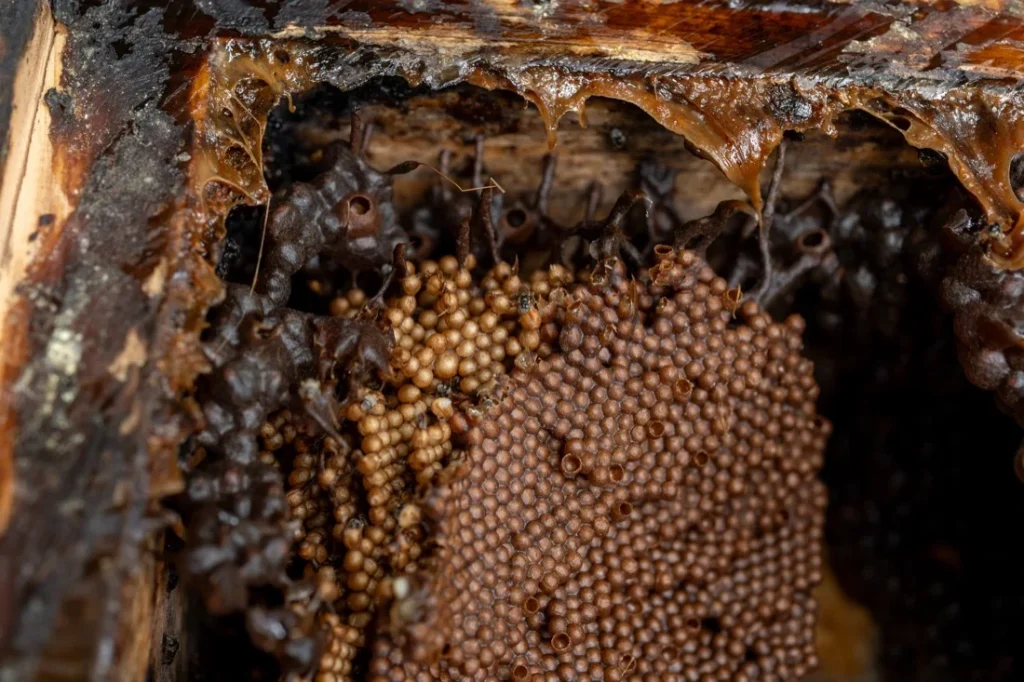
Keeping stingless bees
These bees pollinate, lift yields, and give a valuable honey used as medicine. They also cut burning and chemical use, because they can only live where there is neither.
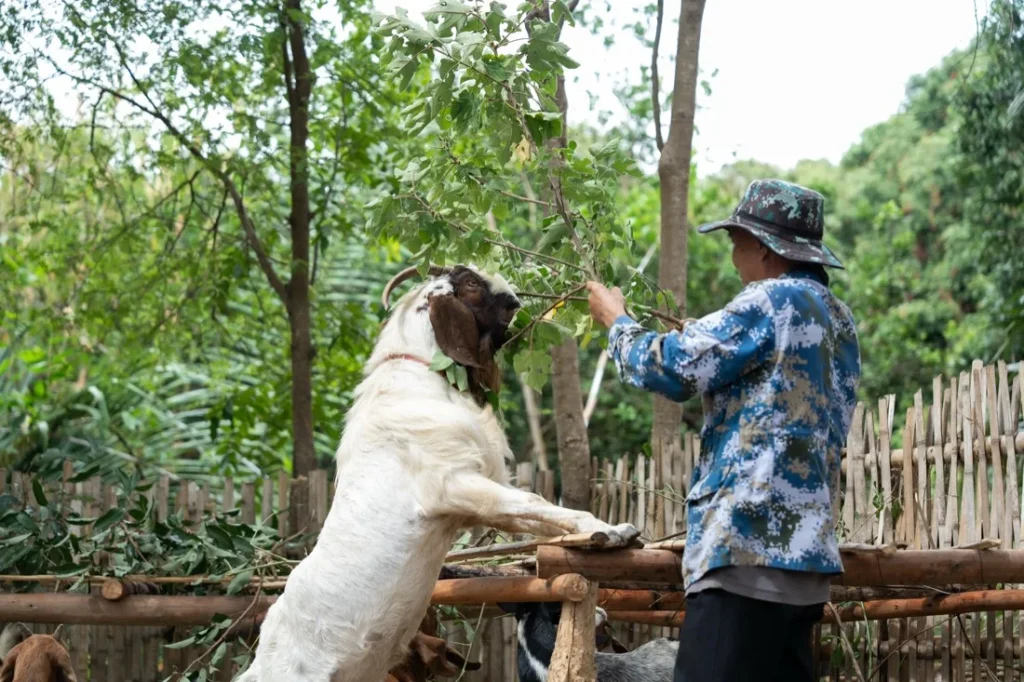
Keeping goats
Goats are fattened and bred for sale — a doe kids about twice a year — and they are undemanding eaters, clearing crop residue that would otherwise be burned, along with a wide range of plants.
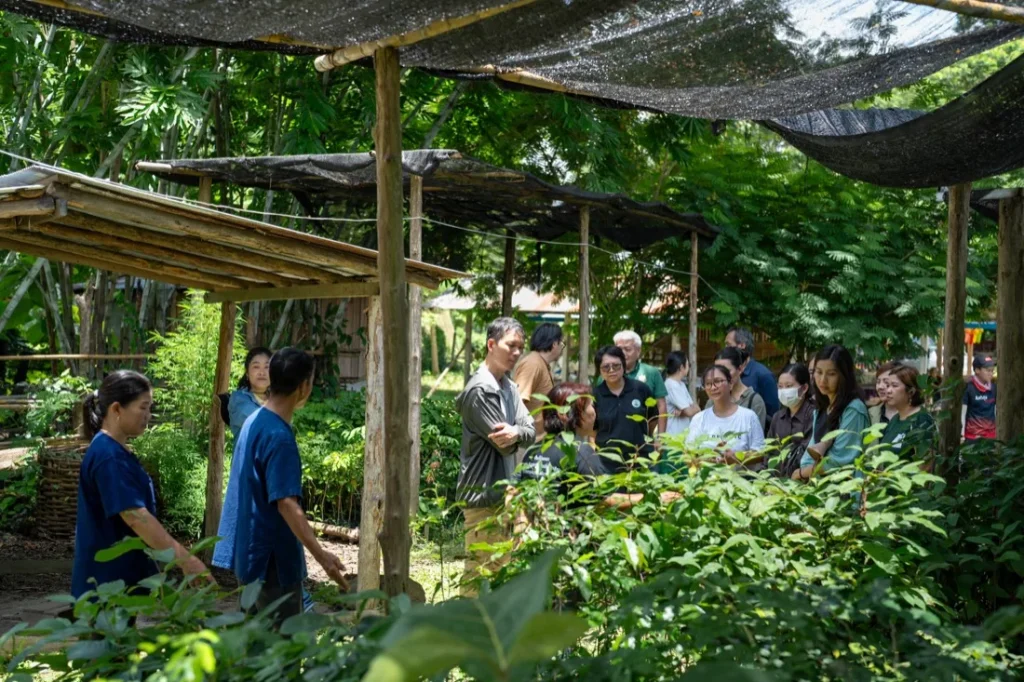
New openings through the community enterprise
Tree planting becomes a community business: working with local specialists to develop products tied to restoring the Nan headwaters — stingless bee honey soap, for instance.
Meet the people who plant
The Our Trees community enterprise group
brings together farmers in Santi Suk district, Nan province,
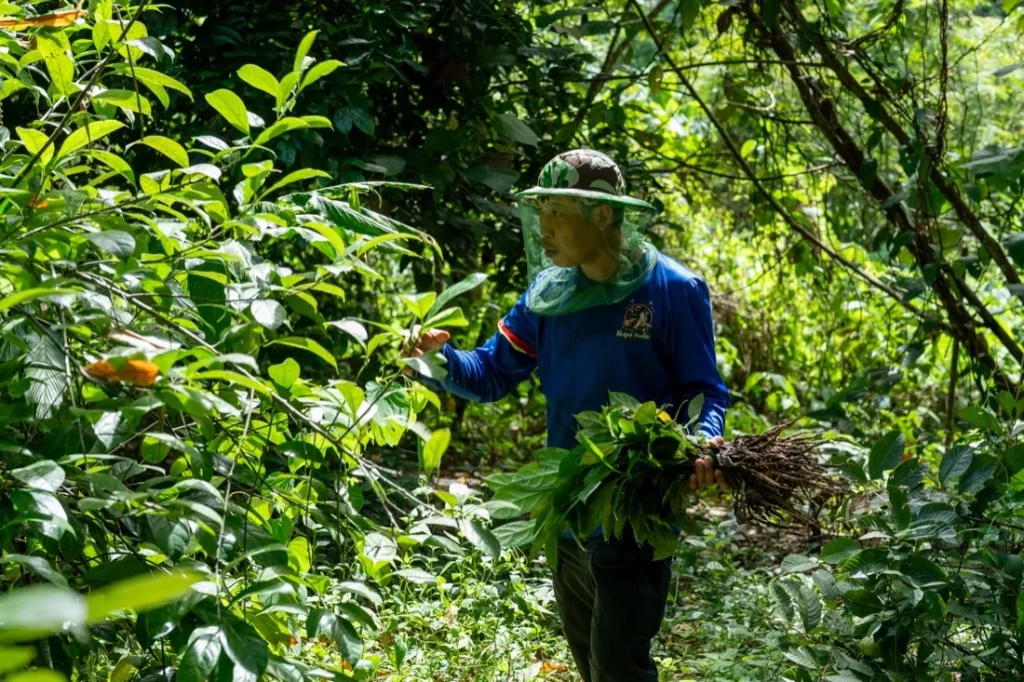
who plant together and have built businesses around it — raising seedlings, keeping stingless bees and goats, making the products that come from them, and hosting study visits. Our Trees helped them prepare, and they were legally registered in 2023.
Join us in planting our trees
to grow a future where nature, communities andall of us grow together