
How we plant
More than planting trees
Our Trees is building a system that can show
that nature and people are growing together
We work with farmers at every step and report back to donors: choosing native species suited to the land and to what the farmer needs, planning how the plot is managed, caring for the trees and tracking them — so that what grows there is good for the ecosystem and for people, for a long time.
1
Support
Donate 130 baht per tree through taejai.com, with a tax deduction. Organisations and groups can add supporting activities in their own name.
2
Plant
Farmers plant native species between June and August each year and tend them for three years.
3
Track
Farmers record the coordinates and species of every tree, and score its health one by one.
4
Report
Supporters receive a project report and per-tree updates once a year.
The year, step by step
so you can be sure that everything you give is planted, tracked and reported in the open
Activity
Aug
Sep
Oct
Nov
Dec
Jan
Feb
Mar
Apr
May
Jun
Jul
1Farmers plant
according to the donations received up to 31 July
2Caring for the trees
goes on all year round
3Farmers collect data
to track how the trees are growing
4Reporting back to donors
An email with tree updates and the annual project report
30 June
Donor emails go out
31 July
Donations close for the year
1
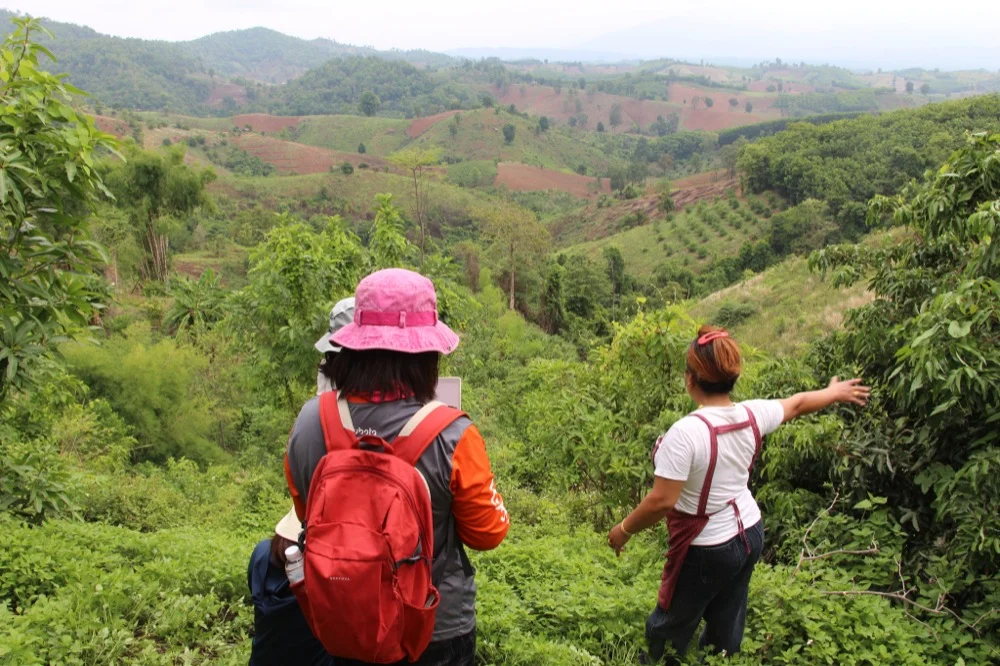
Choosing the plot and the species
Before any planting, Our Trees works with the farmer to gather ecological data about the plot and understand their economic and social situation, so the species chosen fit the conditions the owner is actually working with. We plant natives, so they thrive where they are and the mix stays diverse.
2
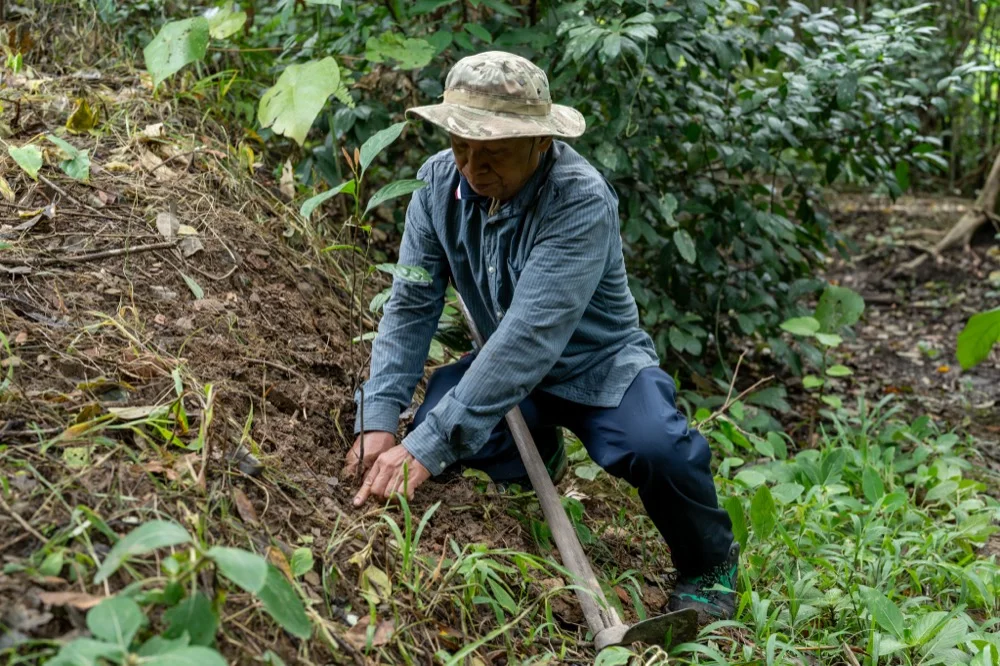
Designing the plot with the farmer
Nobody knows the land better than the farmer, so they help design the plot and how it is run — where each tree goes, how water is handled, how fire is managed — to match their way of life and the shape of the land.
3
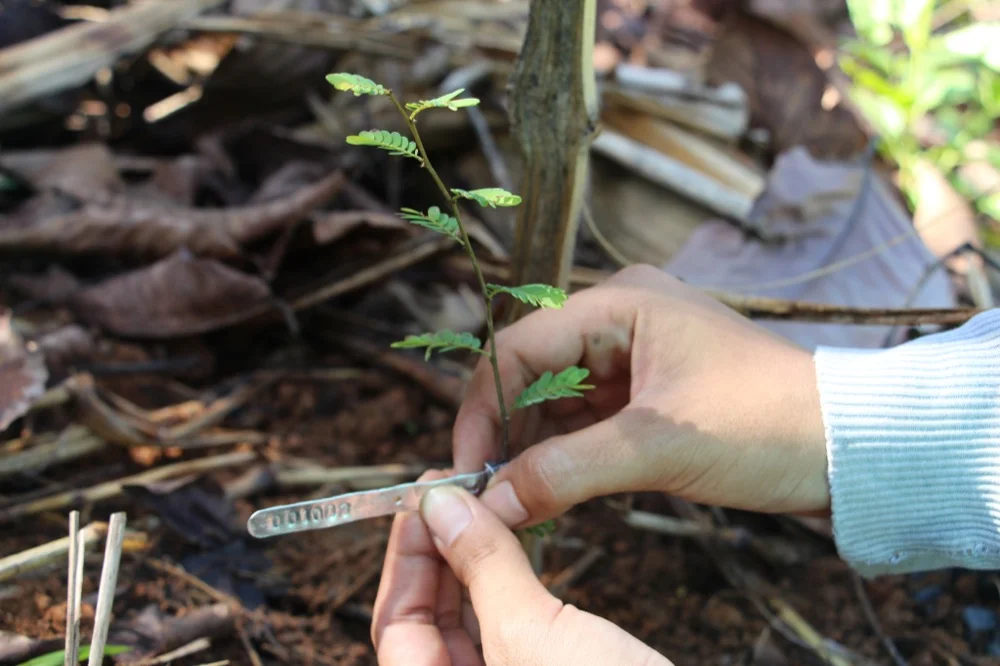
Planting, tending, tracking
Once planted, every tree is given a GPS position so it can be followed. The farmer tends it, and its data and health are reported for three years.
Every donation is what lets us
keep planting, tracking and caring for these trees
Get to know
the tree tracking system
Follow the trees, and the change, in the open
Donors can see the project-wide picture, for both the environment and the community, in the public annual report.
What you can follow for each tree
(three years of data, updated once a year)
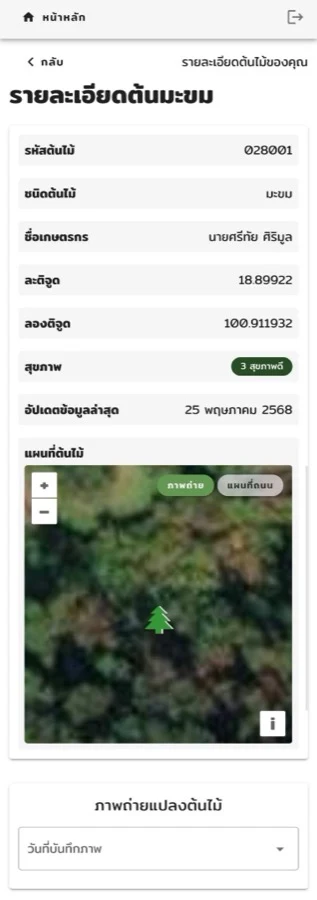

GPS coordinates
The tree’s position is fixed by GPS from the day it goes in.

An annual health score
An assessment of how the tree is doing — whether it survived, and how strong it is.

Species
A record of which native species were planted where.

An annual photograph
A yearly photograph from the planting site, representing the farmer’s plot.

Estimated carbon dioxide absorbed
The perennials planted by the project are slow-growing natives, absorbing an average of 9.5 kg per tree per year once a sapling reaches a girth of 15 cm or more measured at a height of 130 cm. 1,000 kg equals 1 tonne. Source: Thailand Greenhouse Gas Management Organization (Public Organization), 2011.

Estimated oxygen released
An average of 6.91 kg per tree per year, once a sapling reaches a girth of 15 cm or more measured at a height of 130 cm. 1,000 kg equals 1 tonne. Source: Thailand Greenhouse Gas Management Organization (Public Organization), 2011.
Our Trees
brings people together,
beside the forest and far from it
Looking after nature is not one group’s job, Our Trees
so we connect people from different places and different roles to make something good together.
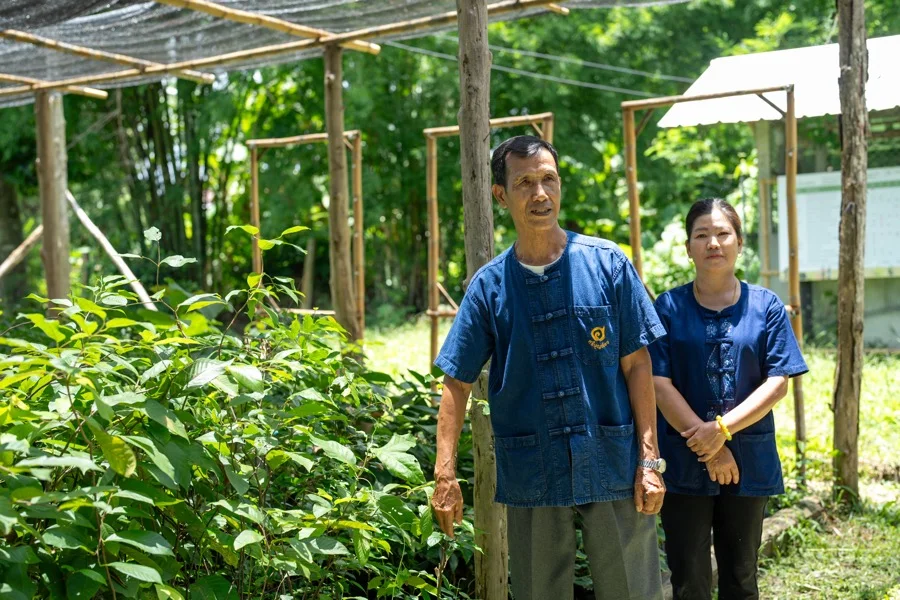
Farmers
The people beside the forest who set out to plant, tend and track the trees — restoring the environment, building a lasting income for the community, and standing up to a changing climate.
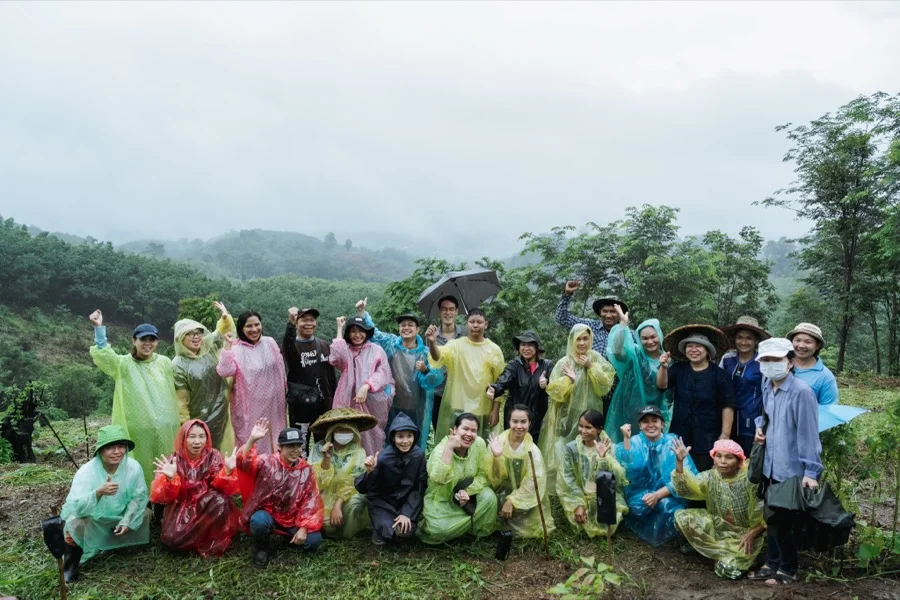
Businesses, organisations,
groups and individuals
Far from the forest, we still live off natural resources — and in how we live and what we do, we both cause global warming and feel it. Anyone can be part of looking after the planet by backing these farmers and following what gets planted.
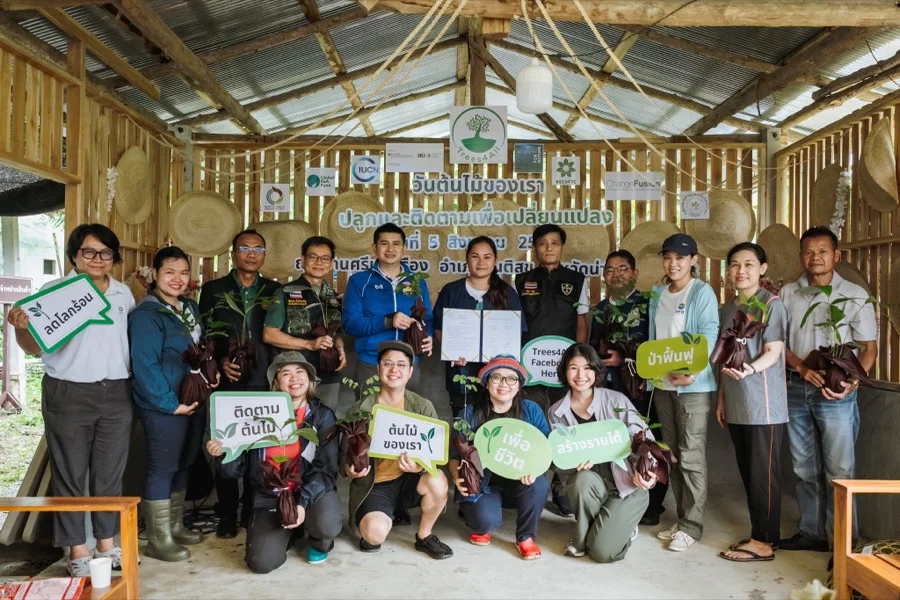
RECOFTC Thailand and partner organisations
Civil society organisations, universities and government bodies, each with their own expertise, working together to build farmers’ capacity for sustainable agriculture, create alternative livelihoods and incomes for the community, and bring in technology and new ideas that make the work go further.
Join us in planting our trees
to grow a future where nature, communities andall of us grow together